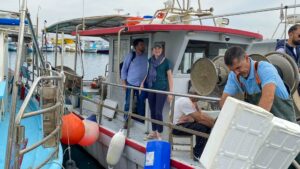
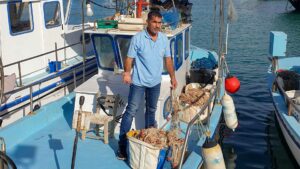
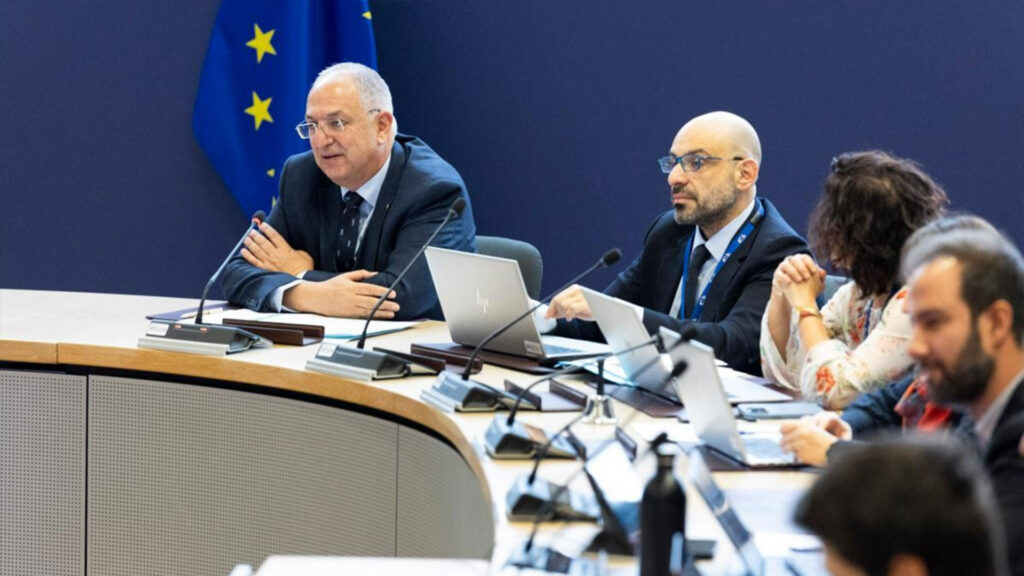
This analysis draws on field findings that BlueMove Fund Manager Camille Richer shared with the Cabinet of Commissioner Kóstas Kadís, Fisheries and Oceans, in December 2025, following the Implementation Dialogue on Small-Scale and Coastal Fisheries held in Brussels on 24 November 2025. It reflects direct experience gathered through BlueMove’s ongoing work with small-scale fishers in the Mediterranean.
Small-scale coastal fishers make up most of Europe’s fishing fleet, yet they receive only a small share of the funding meant to support them. Rigid eligibility rules, slow decision-making, and a lack of upfront capital keep them locked out of the European Maritime, Fisheries and Aquaculture Fund (EMFAF).
Field experience from Croatia, Cyprus, Greece, and Portugal shows how these barriers translate into real financial losses and stalled modernisation projects.

The core recommendation is straightforward: introduce digital communication, confirm equipment eligibility in writing, build grace periods into delivery deadlines, and scale up pre-financing mechanisms so fishers can start projects without bearing the full liquidity risk themselves.
European small-scale fishers are central to EU fisheries policy
Small-scale coastal fishers fish close to shore, use low-impact gear, and depend directly on healthy marine ecosystems. EMFAF was designed to help this fleet modernise safely and transition towards climate-resilient practices. EU countries must take into account the specific needs of small-scale coastal fishing in their EMFAF programmes, including simplified application procedures.
BlueMove is a non-profit European initiative founded by BlueSeeds and the WWF Mediterranean Marine Initiative, with funding from the MAVA Foundation. Its mission is to reduce the administrative, financial, and technical barriers that keep small-scale fishers from benefiting from EMFAF. It combines tailored technical assistance, access to upfront capital, and partnerships with local organisations to ensure long-term ownership of each project.
This work aligns directly with the EU Action Plan for Small-Scale Fisheries and the Common Fisheries Policy’s objectives of sustainable resource use and coastal community vitality. It also echoes the Regional Plan of Action for Small-Scale Fisheries in the Mediterranean and the Black Sea, a ten-year commitment by the General Fisheries Commission for the Mediterranean to protect small-scale fishing livelihoods.
Administrative rules still fail European small-scale fishers
BlueMove’s field teams work directly with fishers, cooperatives, and Managing Authorities in Croatia, Cyprus, Greece, and Portugal. Each country reveals a different facet of the same structural problem: rules and timelines built for large operators, applied to fishers who cannot absorb delays or advance costs.
In Croatia, working alongside WWF Adria, Ante Sladoljev, and the ZEF financial cooperative, BlueMove’s teams recorded delays of at least nine months between an application and a final decision under the safety and energy efficiency measure. Navigation and safety equipment such as GPS devices and autopilots was also rejected on the grounds that it might increase fishing capacity, even though this equipment mainly improves safety and fuel efficiency.
Cyprus illustrates how rigid rules can turn a well-designed grant into a financial trap. Working with the Enalia Physis Environmental Research Center, BlueMove supported four small-scale fishers who could not pay upfront for dolphin deterrent devices while waiting for their grant. When a planned pre-financing facility with a local bank could not be implemented in time, BlueMove’s field teams advanced €16,985 directly to the fishers, under legal supervision, so they could pay the manufacturer and meet the funding deadline. The equipment supplier then delivered later than agreed. Because the projects were not marked as complete before the deadline, the four grant approvals were cancelled, and BlueMove now stands to lose the full amount it advanced.
In Greece, working with FishForma Co. and WWF Greece, BlueMove’s teams have observed national EMFAF calls for small-scale fisheries running more than a year behind schedule, leaving fishers unable to plan investments.
In Portugal, alongside WWF Portugal and Credito Agricola, unclear rules around the 10% advance payment continue to limit its usefulness for fishers with the least access to banking.
If these patterns continue unaddressed, small-scale fishers will keep falling behind on safety upgrades and energy efficiency, precisely when fuel costs and fleet renewal needs are rising. Fishers with limited digital literacy or no access to bank credit stand to lose the most ground.
The evidence against current EMFAF delivery is clear
Small-scale fishers are structurally underfunded relative to their weight in the fleet. Between 2014 and 2020, small-scale fishers received only 3% of the funding earmarked for Mediterranean fishing fleets, despite representing 83% of active fishing vessels in the region. This imbalance sits at the heart of the difficulties facing European small-scale fishers today.
Administrative delays carry a real cost, not just an inconvenience. At least 15 Croatian fishers were still waiting for a decision nine months after applying, with some decisions still delivered by post, adding one to two months of extra delay. Slow decision-making of this kind discourages fishers from applying at all.
Rigid interpretation of eligibility rules undermines the fund’s own safety objectives. Rejecting GPS devices and autopilots as capacity-increasing equipment penalises exactly the kind of investment EMFAF is meant to encourage: safer, more fuel-efficient small-scale fishing.
Lack of upfront capital blocks even approved projects. The Cyprus case shows that a single missed delivery deadline, caused by an external supplier rather than the fishers themselves, can cancel a fully compliant grant and cost an intermediary organisation €16,985 in unrecoverable advances.
Proven solutions already exist and can be scaled. Fishing Animateur in Cornwall pairs hands-on grant support with credit union loans, helping fishers bridge the same gap between purchase and reimbursement that BlueMove addresses across the Mediterranean. Portugal’s new network of Fisher Support Offices, rolled out across ten ports following a WWF Portugal–BlueMove pilot project, is another strong indication that targeted guidance works.
Practical steps could fix EMFAF delivery for fishers
Managing Authorities should pilot local innovation and build fishers’ capacity. Member States should test adapted delivery methods such as cluster applications or cooperative-based submissions, exchange successful practices on safety upgrades and low-impact gear transition, and invest in fishers’ financial literacy and digital skills so they can engage with EMFAF calls independently.
Managing Authorities should simplify calls and give fishers a single point of contact. Calls should use short, clearly structured forms that reduce reliance on external consultants, and each Managing Authority should assign a dedicated national contact point for small-scale fisheries to handle troubleshooting and ensure consistent interpretation of rules.
Managing Authorities should introduce digital notification alongside postal mail. Decisions on funding applications are still often communicated by post. Email or portal-based notification, combined with real-time status tracking, would remove this avoidable delay and let fishers follow their application’s progress.
Member States should commit to published calendars and maximum response times. Managing Authorities should publish and respect indicative calendars for evaluation, contracting, and disbursement, avoiding deadlines during high fishing seasons, and adopt service-standard commitments with maximum timeframes for acknowledging applications and issuing decisions. This includes clearing existing backlogs, such as outstanding 2024 applications under Croatia’s safety and energy-efficiency measure, with a clear timeline for decision and disbursement. Preliminary “expression of interest” mechanisms could also help gauge demand among fishers, particularly in remote or island communities, before a call is fully published.
The European Commission and Managing Authorities should confirm, in writing, that safety and fuel-efficiency equipment is eligible. GPS devices, plotters, and autopilots reduce fuel consumption and improve safety. Explicit written confirmation would end the ambiguity that currently discourages fishers from investing in modernisation.
Managing Authorities should build flexibility into delivery deadlines and pre-financing support. Equipment delivery delays caused by manufacturers or shipping, rather than by fishers themselves, should allow a 60 to 90 day grace period rather than triggering cancellation. Managing Authorities should also agree a support protocol with fishers, intermediaries, and financial partners so that pre-financing or third-party assistance never disadvantages the beneficiaries it is meant to help.
The Commission and Member States should scale up pre-financing and operationalise advance payments. Formal partnerships with ethical lenders and credit unions, similar to the model tested by Fishing Animateur in Cornwall and by BlueMove across the Mediterranean, would let fishers start projects without bearing the full liquidity risk themselves. Where advance payments already exist, such as Portugal’s 10% mechanism, Managing Authorities should publish clear, public guidelines on conditions, timing, and guarantees.
Conclusion
Small-scale fishers remain among the most important stewards of Europe’s coastal waters, yet they are also among the most exposed to administrative and financial exclusion from the funds designed for them. The barriers described here are structural, but they are not inevitable. Digital communication, written clarity on equipment eligibility, realistic delivery windows, and scaled-up pre-financing would each remove a concrete obstacle standing between fishers and the support they are owed.
BlueMove works every day alongside fishers, cooperatives, and Managing Authorities to close this gap, and remains ready to share field experience with decision-makers who want EMFAF to reach the communities it was built for.
Answers to some questions
What has the European Commission already committed to for small-scale fisheries?
The Commission’s Action Plan for Small-Scale Fisheries and the Common Fisheries Policy both commit to simplifying access to EMFAF support and improving the socio-economic resilience of small-scale coastal fleets. The gap this article describes lies in how these commitments are applied in practice at national level, not in the policy intent itself.
Which EU countries show the most acute EMFAF delivery problems?
Field experience points to recurring issues in Croatia, Cyprus, Greece, and Portugal, each with a different dominant blockage: decision delays in Croatia, cancellation risk tied to supplier delays in Cyprus, overdue national calls in Greece, and unclear advance-payment rules in Portugal. The underlying causes, however, are common across Member States.
Do these recommendations require changing the EMFAF regulation?
Most of the improvements outlined here concern how Managing Authorities communicate and apply existing rules, rather than the EMFAF regulation itself. Digital notification, written eligibility guidance, and delivery grace periods can generally be introduced through national administrative practice.
What is the cost of inaction on EMFAF delivery for small-scale fishers?
Continued delays and rigid eligibility interpretation would leave small-scale fishers further behind on safety and energy-efficiency upgrades, at a time when fuel costs and fleet renewal needs are rising. It would also widen the existing gap between the fund’s stated priorities and where its money actually reaches.
How can funders and NGOs contribute to improving EMFAF delivery?
BlueMove works with public and private partners across the Mediterranean and Atlantic regions and welcomes dialogue with decision-makers, funders, and Managing Authorities on how to improve EMFAF delivery for small-scale fishers.
Sources
- European Commission, Small-scale fisheries, Oceans and Fisheries.
- BlueSeeds, Pre-financing sustainable fishing projects.
- General Fisheries Commission for the Mediterranean (FAO), Regional Plan of Action for Small-Scale Fisheries in the Mediterranean and the Black Sea.
- ClientEarth, Small-scale fishers: least supported recipients of EU funds.
- The Fishing Daily, Small-scale EU fishers unite, urging action in 2026 policy plan.
- Fishing Animateur, Case studies.