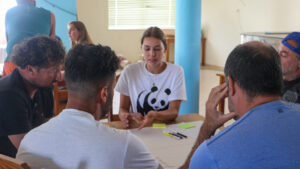
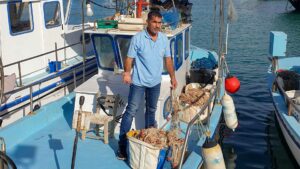
Small-scale fishers across the Mediterranean want to modernise their practices. What they lack is not willingness, but access to funding that matches their reality. BlueMove’s 2025 annual report shows what happens when technical assistance, financial engineering and pre-financing come together to close that gap, and why funders and NGOs still have a critical role to play in scaling it up.
Small-scale fishers across the Mediterranean struggle to access funding
European funding for sustainable fisheries exists, notably through the European Maritime, Fisheries and Aquaculture Fund (EMFAF). Yet between EU ambitions, national frameworks and administrative realities, this funding often remains complex, fragmented and poorly suited to the economic cycles of small-scale fishers.
This mismatch slows down investment in more selective gear, safer equipment and biodiversity-friendly practices, precisely the changes that public policy is meant to encourage.
BlueMove was built to bridge that gap. The mechanism combines:
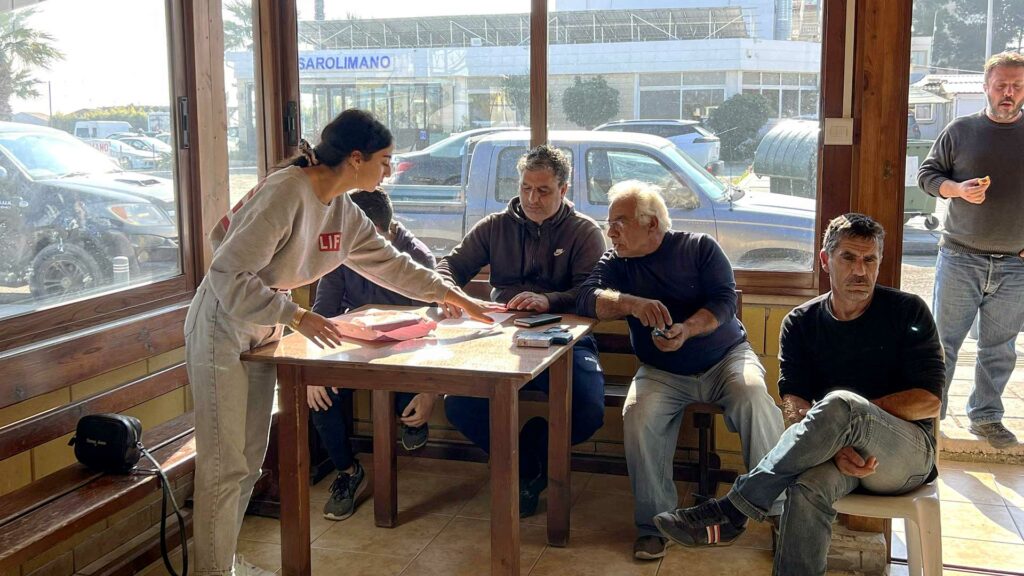
- Technical assistance, helping fishers analyse calls for proposals, prepare applications and liaise with managing authorities, and help fishers structure projects so they meet eligibility criteria
- Pre-financing, advancing funds so fishers are not blocked by delayed grant disbursement
BlueMove turned EMFAF funding into results in 2025
In 2025,
- 216 small-scale fishers took part in BlueMove information meetings across the Mediterranean,
- 47 received technical assistance to submit an EMFAF application,
- €1,147,139 in EMFAF funding were requested by all the fishers combined with BlueMove’s support, and
- 7 pre-financing arrangements were also provided, totalling €33,577.
Results varied significantly by country, and that variation is itself informative for anyone assessing where support is most effective.
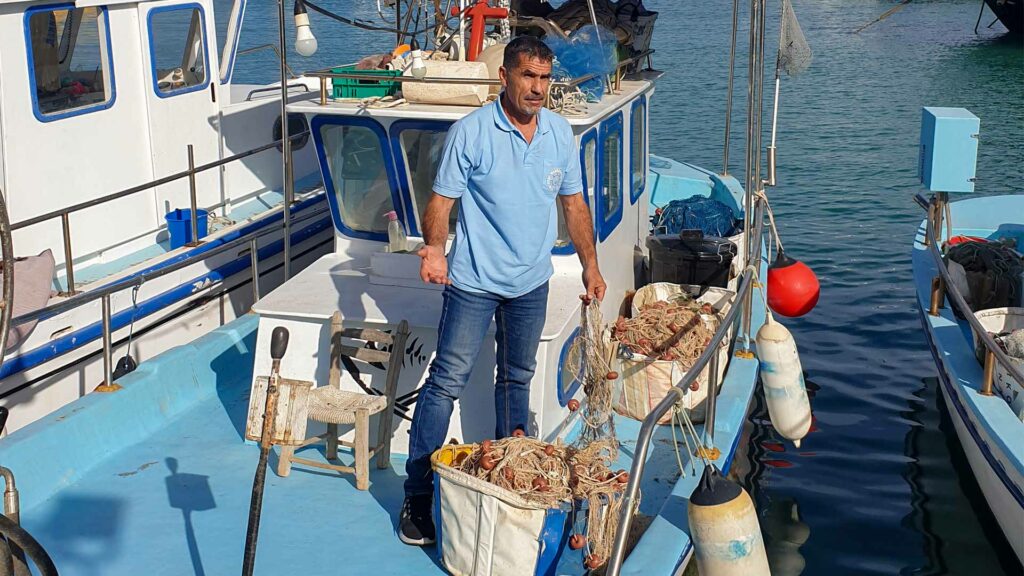
In Croatia, working with WWF Adria and technical assistant Ante Sladoljev (Blue&Brown), 25 fishers were supported and three accessed €16,592 in pre-financing through the Croatian ethical finance cooperative ZEF. In total, €951,910 in EMFAF grants are expected to be mobilised, mainly for energy efficiency, more selective equipment and on-board safety. Croatia shows what the BlueMove model can achieve when calls for proposals are published on schedule and national authorities cooperate closely.
In Cyprus, six workshops run with Enalia Physis brought together 66 participants and generated interest from 25 fishers, eight of whom received individual support. Six applications were approved for gear designed to reduce interactions with marine mammals, worth €36,396 in requested funding. Faced with banking constraints, BlueMove advanced €16,985 directly to four fishers as repayable pre-financing, a concrete illustration of why this bridging function matters.
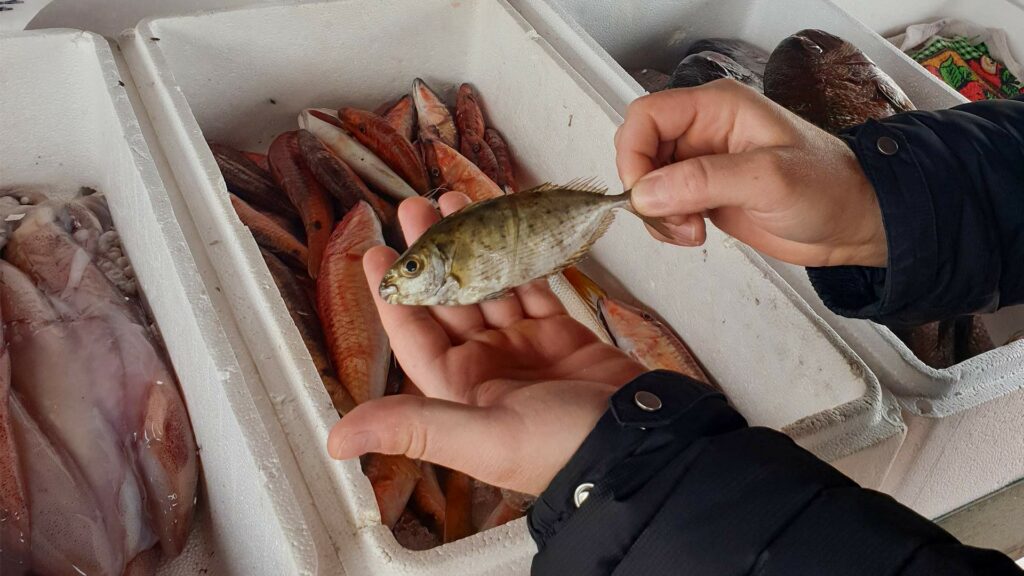
In Portugal, WWF Portugal engaged 45 fishers from communities already involved in co-management approaches, though only 14 requested technical support, partly due to the complexity of navigating multiple national application platforms. No fisher used pre-financing, as the interest rates on offer were considered too high. Still, the project prompted Portuguese institutions to plan around ten dedicated support desks for grant applications.
In Greece, no funding was triggered in 2025 because the national EMFAF calls for small-scale fisheries had still not been published, despite repeated announcements. With the help of WWF Greece and technical assistant Eirini Renata Karathanou (FishForma Co.), BlueMove nonetheless identified fisher needs, prepared pre-financing scenarios and opened dialogue with potential financial partners for the year ahead.
Fisheries pre-financing alone cannot remove every barrier
Not every barrier has been solved. Access to finance remains one of the main obstacles fishers face, and 2025 exposed structural weaknesses that go beyond BlueMove’s direct control: dependence on international suppliers, delivery delays that threaten project timelines, and lending institutions that are still poorly adapted to small-scale fisheries.
BlueMove has taken these lessons directly to European decision-makers. During an Implementation Dialogue on Small-Scale and Coastal Fisheries organised by the European Commission in November 2025, BlueMove presented these barriers to the European Commissioner for Fisheries and Oceans, Kóstas Kadís, positioning the organisation as a translator between fishers’ realities and EU policy design.
Our team is looking for partners.
BlueMove is a French non-profit association, approved under Article 238 bis 4 of the French General Tax Code to issue tax receipts for donations. Every euro invested has direct leverage: in 2025 alone, technical and financial support helped fishers request over €1.1 million in EU grants, on top of BlueMove’s own pre-financing.
For NGOs already working with fishing communities, BlueMove offers a ready-made mechanism that can be implemented. Partners such as WWF Adria, WWF Portugal, WWF Greece and the Cypriot Enalia Physis Environmental Research Centre have already adapted BlueMove’s tools to their local fishing communities, showing the model can be replicated across different national contexts and regulatory environments
The challenges documented in this report, from banking constraints to delayed national calls, show what kind of systemic barriers that sustained funding and broader partnerships can help resolve. BlueMove’s 2025 annual report sets out the full financial picture, country-by-country results and the roadmap for 2026.